Your AI can run your IT shop's books. Really.
Connect FinStat from Grok, ChatGPT, Claude, Cowork, Work, Cursor, Codex, Agent, Grok Bot, or Perplexity on your computer. Hand over your Stripe settlements, checking and Visa statements, retainer invoices, and cloud/SaaS receipts, and it hands you a review-ready P&L, every transaction tied to its source.
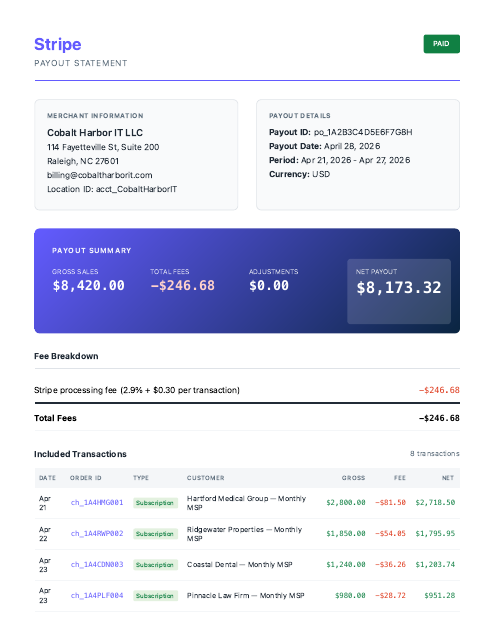
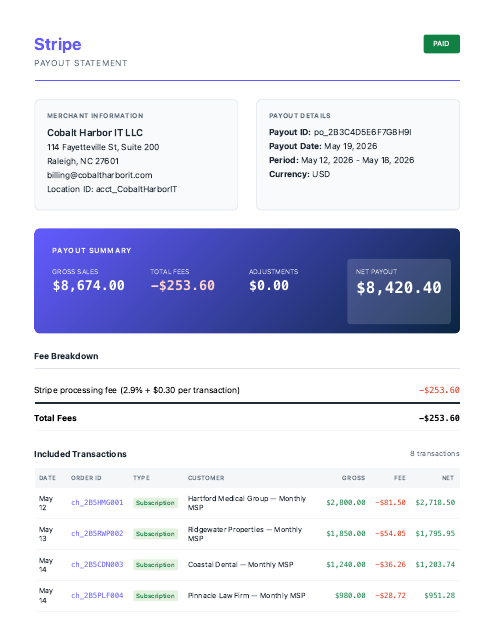
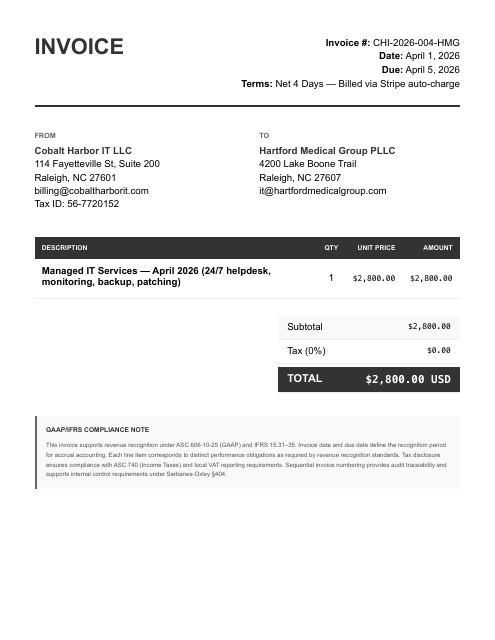
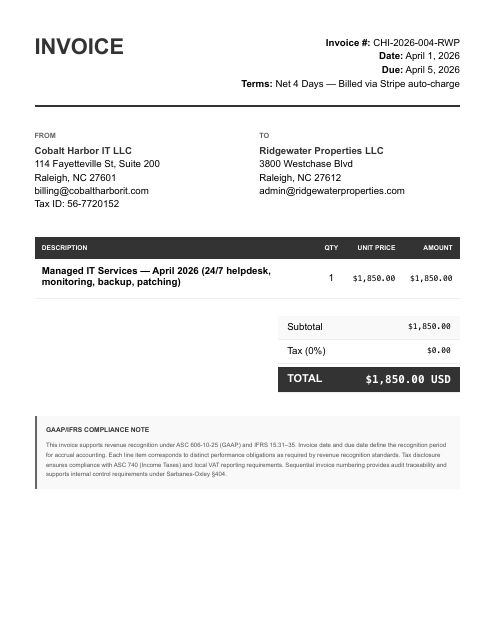
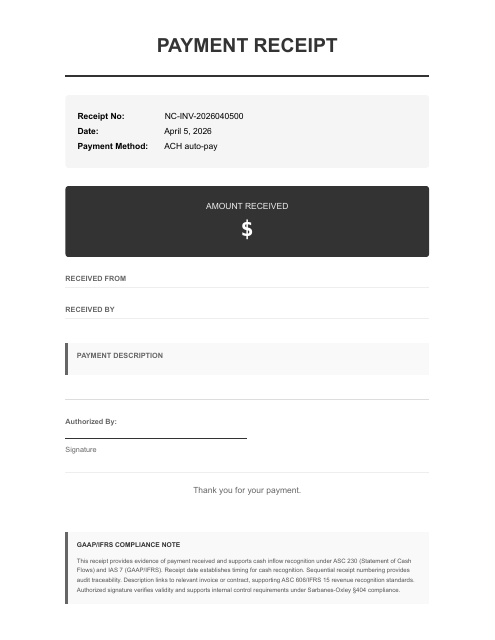
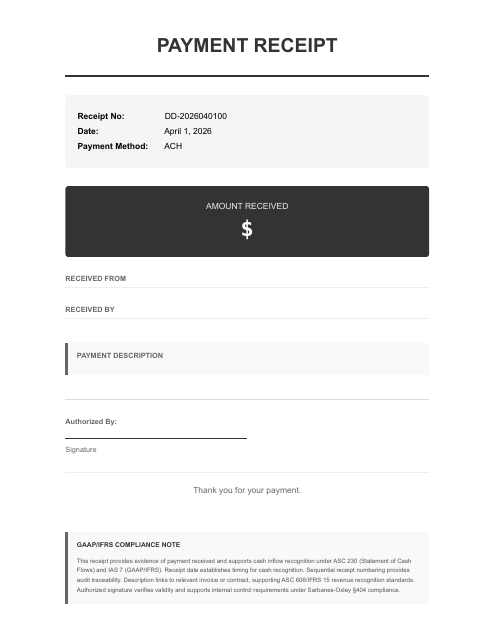
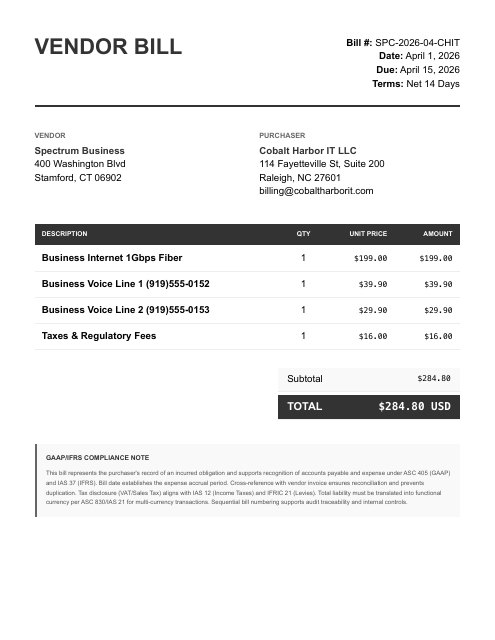
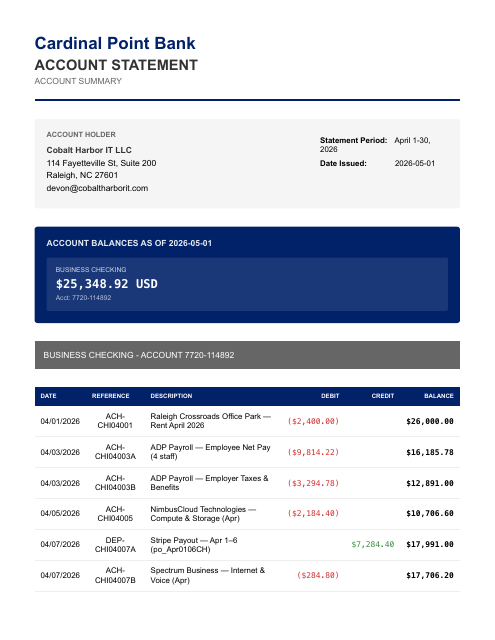
Reconciled to the penny. Then ask your AI anything about your books.
Figures from the Cobalt Harbor IT LLC sample case — a fictional business — every transaction tied to its real source document, balanced and review-ready.
Create your account. Continue in the console.
- Create your account
Sign up on any device. FinStat resolves your account and loads the free grant before connection setup.
- Open FinStat on your agent’s computer
Go to console.finstat.ai and sign in with the same account. If you are already on that computer, just continue.
- Follow Connections
Choose your agent in the console and use the exact instructions provided for that host.
The MCP address and host-specific setup steps are shown under Connections after sign-in.
The parts that eat your evening. FinStat catches every one.
Stripe pays out weekly net of fees but only two of eight-plus settlement reports are in the folder — the rest are unexplained deposits
Recurring MRR retainers and one-off project work have to be split into separate income streams
Project deposits and balance payments hit the bank with no project invoice — only the monthly retainers are on hand
It reconciles the Apr 21–27 Stripe settlement to its exact $8,173.32 checking deposit and matches the $2,800 Hartford Medical and $1,850 Ridgewater retainer invoices to their Stripe charges, then flags the $4,800-plus-$8,400 Hartford network-upgrade project payments that have no invoice in the folder at all.
Three steps. Every one secure.
Start in the console.
Create your account, then open Connections in the FinStat console on the computer where your agent runs. Follow the instructions there, then say: help me get started.
Hand over the documents.
Give your AI your statements, payouts, receipts, and bills — attach them, then say: run my books.
Ask for any report.
“Give me a P&L.” “Reconcile May.” “Show every uncategorized transaction.” Review-ready accounting output, in chat.