Bank statements trapped in PDFs? Your AI turns them into import-ready files.
Hand your bank and credit-card statements to your AI, and the FinStat MCP returns clean, categorized files — QBO and OFX for QuickBooks, CSV for Xero, Sage, Excel and anything else.
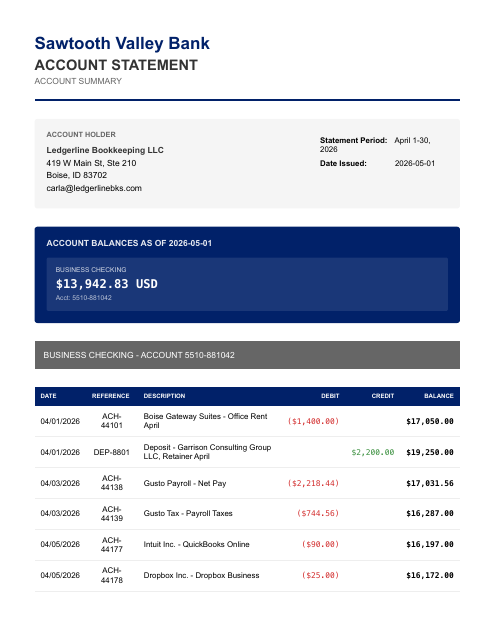
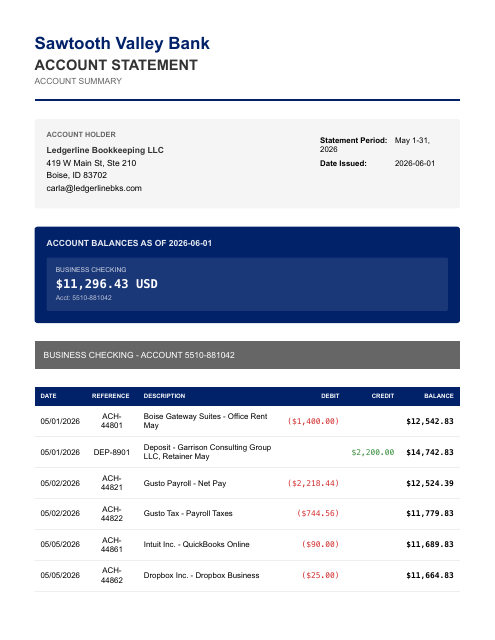
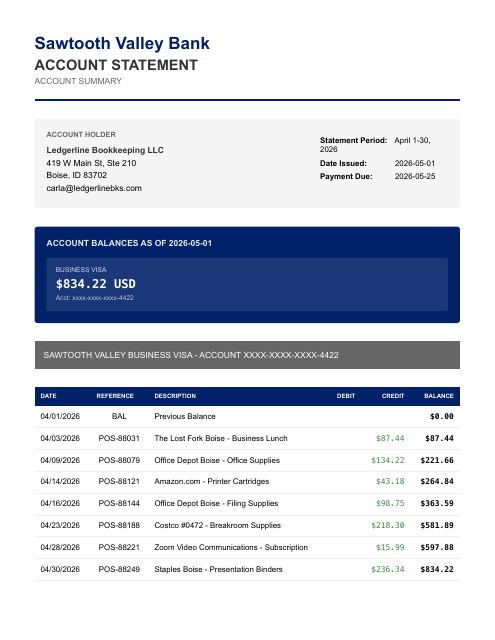
No matter how the bank wrote it. You get clean vendors and data.
1992 DBT PURCHASE - 271004 STARBUCKS T1C FLL812096 PURCHASE-PIN THE HOME DEPOT #1126 GREERAplPay BT*DD *DOORDASH SAN FRANCISCO CAACH DEBIT 6610-99 ADP WAGE PAY PAYROLLSame vendor, same name — every time. Your rules just work, the first time.
Import-ready. Vendors cleaned up and statements reconciled.
Figures from a sample bank-statement export — every transaction tied to its real source line, reconciled and review-ready.
Create your account. Continue in the console.
- Create your account
Sign up on any device. FinStat resolves your account and loads the free grant before connection setup.
- Open FinStat on your agent’s computer
Go to console.finstat.ai and sign in with the same account. If you are already on that computer, just continue.
- Follow Connections
Choose your agent in the console and use the exact instructions provided for that host.
The MCP address and host-specific setup steps are shown under Connections after sign-in.
The parts that eat your evening. FinStat catches every one.
Your bank sends PDFs. QuickBooks wants QBO. Nobody bridges the gap — so you re-type every line by hand.
Generic PDF converters drop transactions, split amounts, and scramble dates — and you don't catch it until reconciliation.
Scanned statements? Most tools choke before they even start.
One statement, several accounts — checking, savings, a credit line on a single document. Old tools can't tell them apart, so you separate them by hand.
FinStat reads every transaction off every page — even scanned statements — cleans each line to a real vendor name no matter how the bank wrote it, and reconciles at the statement layer, not against a balance feed. And when one statement covers several accounts at once, FinStat separates each into its own clean export — something the old exporter never could. Out come the exact files each system expects: QBO and OFX for QuickBooks, CSV for Xero, Sage, and Excel. Want it categorized too? Add a chart of accounts and FinStat books every line.